The ensemble
Some places begin with an encounter; others with a desire to find space.
This is how Cantar Segreto began
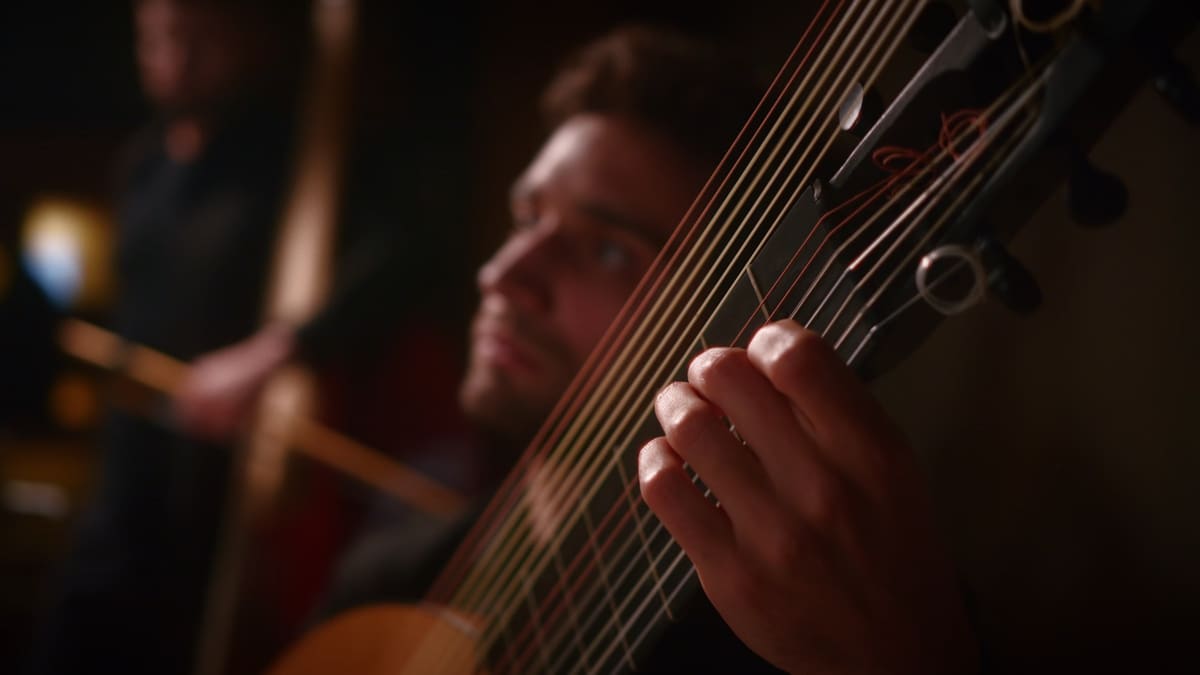
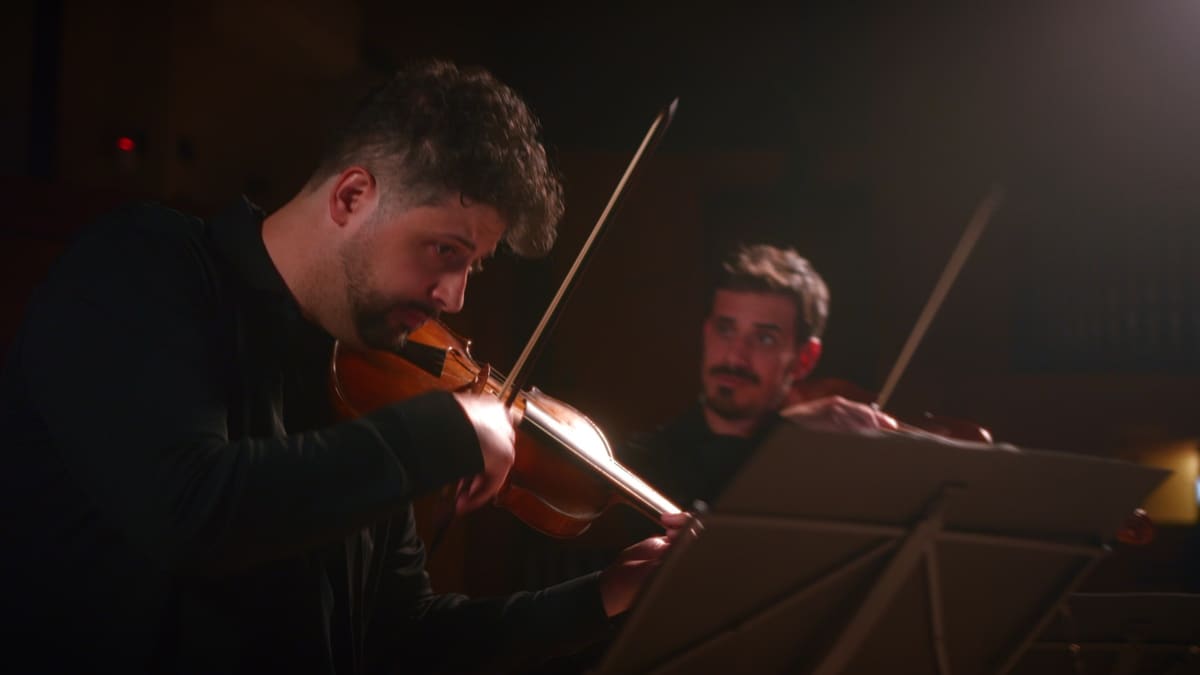
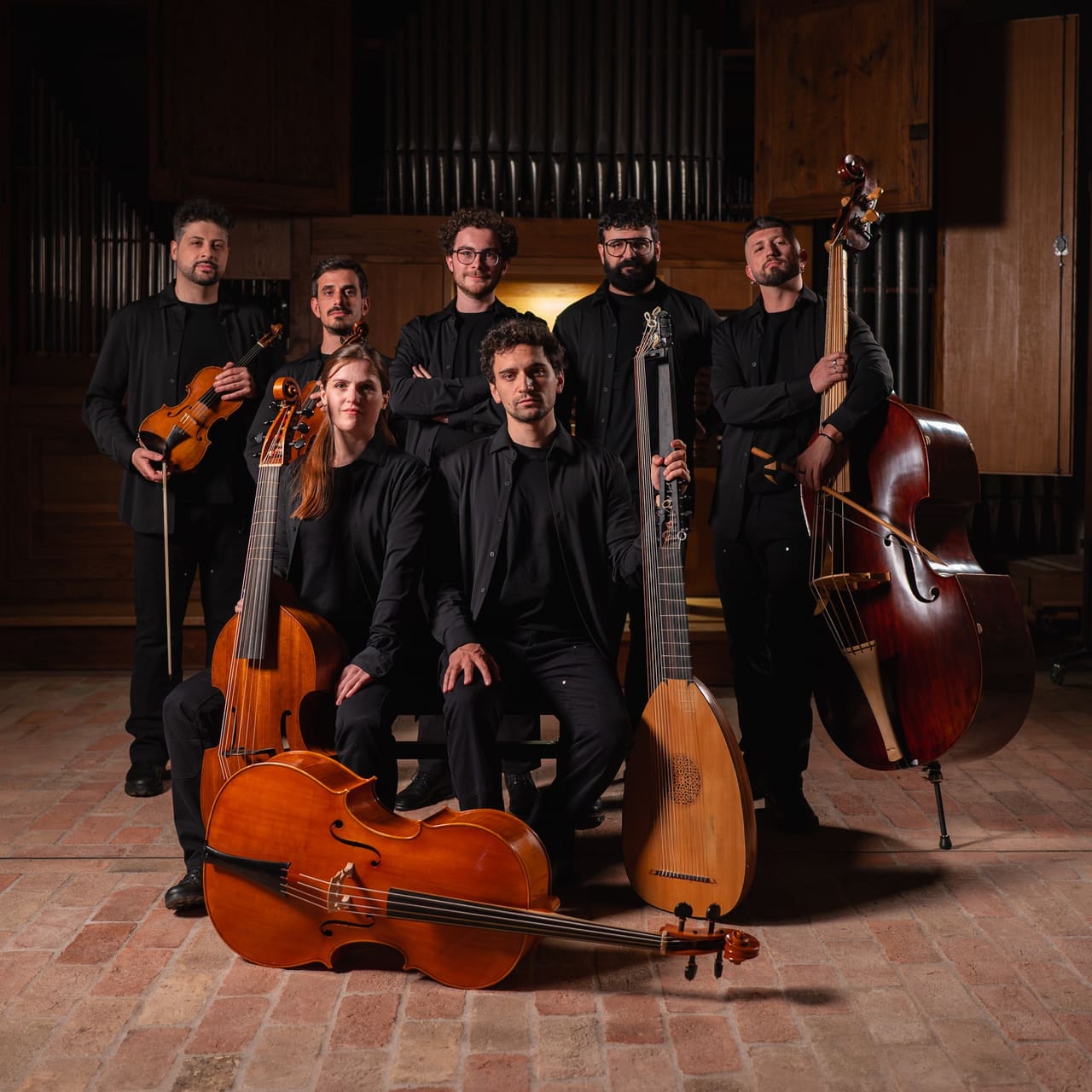
We are musicians and friends who met along different paths and came together through a shared desire to create a space of our own. An open space to listen, experiment and be surprised. A space where tradition is not a destination, but a starting point.
This music is our home language: we know it intimately, we feel it as our own. And that is precisely why we want to keep exploring it, bringing it to life in new ways, discovering new possibilities.
With no boundaries set in advance, and the freedom to imagine what has yet to be.
Instruments
Pierfrancesco Maria Pelà performs regularly with some of the leading early music ensembles: I Barocchisti, Accademia dell’Annunciata, Bremer Barockorchester, Divino Sospiro, La Barocca, Ensemble Claudiana, EstroVagante, Cremona Antiqua, Silete Venti, Accademia La Chimera, La Magnifica Comunità, I Madrigalisti Estensi, Vox Orchester, Ensemble Locatelli, Gli Originali, La Lira d’Orfeo, Les Furiosi Galantes and the Orchestra Nazionale Barocca dei Conservatori, and also works with the Orchestra Sinfonica di Milano and Milano Classica. He has played alongside Giuliano Carmignola, Diego Fasolis, Ilya Gringolts, Mario Brunello, Giovanni Sollima, Leila Schayegh, Anton Steck, Stefano Montanari, Luca Pianca, Federico Maria Sardelli and Ruben Jais.
He has performed at the Auditorium Rai in Turin, the Sala Verdi and Teatro Dal Verme in Milan, the Auditorium Parco della Musica in Rome, the Teatro Ponchielli in Cremona, the Gulbenkian Foundation in Lisbon, the Liebfrauenkirche in Bremen and the Konzerthaus Dortmund, and at festivals including Festival Oude Muziek Utrecht, the Innsbrucker Festwochen der Alten Musik, the Händel-Festspiele in Halle and Magdeburg, MiTo, LacMus Festival, the Noites de Queluz in Portugal and the Festival des Arts Renaissants in France.
He has recorded more than thirty albums for Arcana, Deutsche Harmonia Mundi, PanClassics, Brilliant Classics, NovAntiqua, Dynamic, Tactus and Urania Records. He plays in a standing duo with the organist Nicola Dolci.
Born in Milan in 1991, he graduated in violin with full marks from the Civica Scuola di Musica Claudio Abbado in Milan under Carlo Feige, studied baroque violin with Enrico Onofri at the Conservatorio A. Scarlatti in Palermo, and earned a Master’s degree in baroque violin with highest marks at the Conservatorio E. F. Dall’Abaco in Verona under Andrea Rognoni and Davide Monti; at the same institution he studied baroque viola with Stefano Marcocchi.
Domenico Scicchitano has worked with some of the leading Italian and European baroque ensembles: Il Giardino Armonico, Accademia dell’Annunciata, Cappella Neapolitana, Dramatodia, Le Musiche Nove, Ensemble Mare Nostrum, Enea Barock Orchestra, La Barocca and Accademia Montis Regalis, under conductors including Giovanni Antonini, Federico Maria Sardelli, Antonio Florio, Andrea De Carlo, Alessandro Quarta, Alessandro Ciccolini and Alberto Allegrezza. In November 2019 he was leader in Johann Adolf Hasse’s serenata Semele conducted by Claudio Osele, at the Teatro Ristori in Verona and the Theater an der Wien in Vienna.
He is a founding member of the Compagnia de’ Violini, an ensemble rooted in the Parma area, with which he is bringing the music of Andrea Zani da Casalmaggiore back to light. He founded the Nuova Synapsis Ensemble, devoted for several years to contemporary Italian repertoire, and was artistic director of the first edition of the Antonio Vivaldi Festival in Castrovillari.
With Alessandro Ciccolini he recorded Vivaldi’s sonatas for two violins without bass for Brilliant. In June 2025 he recorded unpublished sonatas by Emanuele Barbella with the Enea Barock Orchestra, playing a 1750 Gennaro Gagliano violin: the album will be released in 2026 by Arion. He has also recorded for Alpha, DHM, Arcana and Da Vinci Records, and for Rai Radio 3 and Rai 5.
He graduated in violin under Luigi De Filippi, studied baroque violin with Alessandro Ciccolini, graduating with honours and distinction, and attended masterclasses with Peter Spissky, Susanne Scholz and Amandine Beyer. In 2020 he completed, with honours, the Master’s in chamber music with Pierpaolo Maurizzi at the Conservatorio di Parma. In 2024 he taught chamber music at the Conservatorio «G. Paisiello» in Taranto, where he also gave a baroque violin masterclass. He is a doctoral candidate at the Conservatorio «A. Boito» in Parma.
Giulia Gillio Gianetta performs regularly with Italian and international ensembles devoted to historical performance on original instruments: the Orchestre des Champs-Élysées under Philippe Herreweghe, Fabio Bonizzoni’s La Risonanza, Andrea De Carlo’s Ensemble Mare Nostrum, Alessandro Ciccolini’s Compagnia de’ Violini, Concerto Theresia, the European Union Baroque Orchestra, Stefano Montanari’s Gli Originali, Ruben Jais’s LaVerdi Barocca, Antonio Greco’s Cremona Antiqua, Stefano Aresi’s Stile Galante, Accademia Montis Regalis, Accademia de La Chimera and the Orchestra Nazionale Barocca dei Conservatori Italiani under Enrico Onofri.
She has performed in halls such as the Elbphilharmonie in Hamburg, Bozar in Brussels, the Philharmonie Luxembourg, the Festspielhaus Baden-Baden, the Victoria Hall in Geneva, the Sala Verdi and Teatro Dal Verme in Milan, the Teatro Regio and Auditorium Rai in Turin, the Sala dei Giganti in Padua and the Palazzo Ducale in Mantua, under conductors such as Salvatore Accardo, Mario Brunello, Giovanni Sollima, Ezio Bosso, Enrico Gatti and Alessandro Moccia.
She has recorded for Glossa, Brilliant Classics, CPO, Tactus, Glaux, Digressione Music and Urania Records, including Vivaldi concertos with the Compagnia de’ Violini and an album with Ensemble Mare Nostrum for Arcana. In 2017 she was a finalist at the Premio Nazionale delle Arti C. Abbado, early music section.
Born in 1991, she began the cello at the age of four with Antonio Mosca at the Suzuki Talent Center in Turin. She earned first- and second-level diplomas in baroque cello and a degree in cello at the Conservatorio Guido Cantelli in Novara under Gaetano Nasillo, and a second-level diploma in viola da gamba with Rodney Prada at the Scuola Civica C. Abbado in Milan.
A Milanese multi-instrumentalist, Fabio Longo plays violone, double bass and electric bass professionally. He is principal double bass and violone of the Centro di Musica Antica Ghislieri, of LaBarocca (the period-instrument ensemble born from the Orchestra Sinfonica di Milano) and of the Vox Orchester.
He also works with Ensemble Locatelli, La Terza Prattica, Musica Antiqua Latina, I Madrigalisti Estensi, Chroma Baroque and Ensemble Salomone Rossi. With these ensembles he has performed in Italy, Germany, Austria, Switzerland, France and Colombia, for institutions and festivals such as the Innsbrucker Festwochen der Alten Musik, the Festival d’Ambronay, the Monteverdi Festival, the Stradivari Festival and RSI in Lugano, taking part in many concerts and recordings.
In the symphonic field he is regularly invited as principal double bass by Milano Classica, Orchestra Canova and Orchestra Vivaldi, and was principal double bass of the Orchestra Sinfonica di Sanremo for several seasons. With the Orchestra Canova he has recorded for Sony Music, Classic Voice and Amadeus.
Alongside his concert work he has long experience in popular music and musical theatre: he has recorded and played live with artists such as Angelo Branduardi, Francesco Gabbani, Marco Mengoni, Lucio Corsi, Diodato and Elodie, has taken part in the major musicals produced in Italy (Cats, Chicago, Mary Poppins, Sister Act) for companies such as Stage Entertainment and Compagnia della Rancia, and was a member of the house band of the television show Zelig.
He graduated with full marks in Classics at the Università degli Studi di Milano, studied double bass with Paolo Rizzi and Piermario Murelli and violone with Vanni Moretto, earning his academic diplomas at the Civica Scuola di Musica Claudio Abbado and the Conservatorio Giuseppe Verdi in Milan, where he also completed the Master’s in chamber music.
Lutenist, guitarist and composer from Bologna, born in 1998, Giulio Petrella has been a guest of international festivals and institutions such as the Monteverdi Festival, Roma Festival Barocco, Staatstheater Darmstadt, Baroque Vivant Basel and the Misiones de Chiquitos, and performs regularly at the Teatro alla Scala, the Festival di Urbino Musica Antica and Musikfest Bremen.
Since 2025 he has been the regular continuo lutenist of The Bowline and Concerto Romano, and also works with Jupiter Ensemble, Modo Antiquo, i Mastricelli and Verità Baroque. Since 2023 he has played classical guitar with LaFil Orchestra, the Orchestra da Camera di Mantova and the Accademia del Teatro alla Scala.
Drawn to artistic and musical research, he was artist in residence at Residenze Erranti 2023 and won the ArCombin3 composition prize. He is founder and artistic director of the cultural association Teatro Magico, based in Milan.
He studied classical guitar with Frédéric Zigante at the Milan Conservatory, lute with Evangelina Mascardi at the Alessandria Conservatory and early music ensemble with Alessandro Quarta at the Verona Conservatory. He is completing a Master’s degree in Ethnomusicology at the University of Pavia.
Organist, composer and conductor, Nicola Dolci has an international concert career, both as a soloist and as organist and continuo player with European ensembles. He teaches organ at the Pontificio Istituto di Musica Sacra in Rome and at the Scuola Diocesana di Musica Santa Cecilia in Brescia.
He works regularly with I Barocchisti, the choir of RSI (Radiotelevisione Svizzera Italiana), Ensemble Quoniam and the Coro Claudio Monteverdi of Crema, in concerts, radio broadcasts and recordings. With the latter he recorded two albums for Dynamic completing the integral sacred works of Francesco Cavalli; his first solo album, Cantus Firmus: Bach and his Mentors, was released by Brilliant Classics.
As a conductor his work ranges from choral to orchestral and ensemble direction: since 2018 he has led the Orchestra Cremaggiore of Crema, and in 2024–2025 he directed the Polifonica Francesco Cavalli, choir of Crema Cathedral. He is organist of the Sanctuary of Santa Maria della Croce in Crema.
His awards include second prize at the International Martini Organ Competition in Groningen in 2022, first prize overall at the 15th Premio Nazionale delle Arti, and second prize overall, with no first prize awarded, at the first Terenzio Zardini International Organ Competition in Verona in 2025.
He graduated in organ with full marks, honours and special mention from the Conservatories of Brescia and Verona under Francesco Zuvadelli, Pietro Pasquini and Massimiliano Raschietti, and continued his studies at the Hochschule für Musik und Darstellende Kunst Stuttgart in the class of Jörg Halubek. He studied organ improvisation with Fausto Caporali and conducting with Alessandro Quarta.
Voices
Benedetta Mazzucato works regularly with L’Arpeggiata under Christina Pluhar, with whom she made her debut at Wigmore Hall in London and, in November 2025, at Carnegie Hall in New York. With the same ensemble she has taken part in productions such as Orfeo Chamán in Bogotá and Ludwigsburg, Monteverdi’s L’Orfeo as Speranza and Ninfa, Dido & Aeneas at the Utrecht Early Music Festival and the Vespro della Beata Vergine at the Barbican in London.
Her leading roles include Arsilda in Arsilda, regina di Ponto with La Cetra under Andrea Marcon, on tour as far as the Concertgebouw in Amsterdam and the Auditorio Nacional in Madrid; Argene in Vivaldi’s L’Olimpiade at the Théâtre des Champs-Élysées and the Theater an der Wien under Jean-Christophe Spinosi, and at the Arena di Verona Winter Festival with Giulio Prandi; Bradamante in Händel’s Alcina in Karlsruhe and in Vivaldi’s Orlando furioso at the Tchaikovsky Concert Hall in Moscow; Silla in Händel’s Lucio Silla at the Palau de les Arts in Valencia with Fabio Biondi; Abra in Juditha triumphans at the Théâtre des Champs-Élysées. She has returned several times to the Innsbrucker Festwochen, with Alessandro De Marchi and with Ottavio Dantone and Accademia Bizantina.
She has recorded Scarlatti’s I portentosi effetti della madre natura, winner of the Opus Klassik for Opera Recording of the Year, and Wonder Women with L’Arpeggiata.
She trained at the Conservatorio Achille Peri in Reggio Emilia, graduating in opera singing in 2011, and was selected in 2012 for the Domingo-Thornton Young Artist Program of Los Angeles Opera and in 2013 for William Christie’s Le Jardin des Voix and the Salzburg Young Singers Project.
Giacomo Pieracci combines his operatic work with a steady commitment to early music and contemporary repertoire. In the baroque field he has debuted many roles in operas and oratorios by Monteverdi (Antinoo in Il ritorno d’Ulisse in patria, Plutone in Il ballo delle ingrate, bass soloist in the Vespro della Beata Vergine), Cavalli (Plutone, Tritone and Sileno in Le nozze di Teti e Peleo), Stradella, Luigi Rossi, Bach (Pilate in the St John Passion, Judas in the St Matthew Passion, bass soloist in the Christmas Oratorio) and Giovanni Battista Vitali.
In the standard repertoire he has sung Mozart’s Commendatore and Figaro, Angelotti in Tosca, the Bonze in Madama Butterfly and Simone in Gianni Schicchi. In today’s music he has given many world premieres and sung roles such as Collatinus in Britten’s The Rape of Lucretia, Don Quixote in Falla’s El retablo de Maese Pedro and Perseo in Sciarrino’s Perseo e Andromeda; Mauro Montalbetti dedicated to him I madrigali della rosa o del sentiero, which he premiered.
He has performed at the Haus für Mozart and the Mozarteum in Salzburg, the Teatro Olimpico in Vicenza, the Teatro Grande in Brescia and the Ponchielli in Cremona, among others, and is a guest of festivals such as the Salzburger Festspiele, Opéra de Monte-Carlo, Monteverdi Festival and Valletta Baroque Festival. He works with Il Canto di Orfeo, Cremona Antiqua, La Barocca, Ensemble Locatelli and Spira Mirabilis. He has recorded for Arcana, Tactus, Dynamic and RAI 5.
He graduated in singing in 2022 with full marks, honours and special mention under Marina Comparato, and in orchestral conducting in 2021 with Marco Boni; in 2021 he was among the winners of the Concorso Comunità Europea for young opera singers of the Teatro Lirico Sperimentale in Spoleto.